

Add products by adding codes
Inductive sensors
( number of products: 857 )Inductive (proximity) sensors from Nexotec: miniature M4–M5, in a threaded housing M8–M30, all-metal and for welding. Sensing range Sn 0.6–50 mm, PNP or NPN output, NO, NC or NO & NC function. Selection tips are below the list.

Inductive sensor M8 Metal face 70 mm connector M12 NPN NO Sn = 1 mm

Inductive sensor M8 Metal face 70 mm connector M12 NPN NC Sn = 1 mm

Inductive sensor M8 Metal face 70 mm connector M12 PNP NO Sn = 1 mm
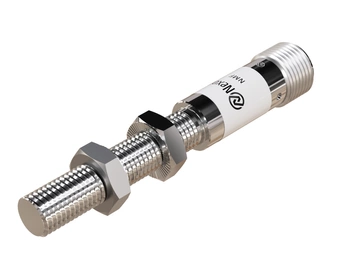
Inductive sensor M8 Metal face 70 mm connector M12 PNP NC Sn = 1 mm
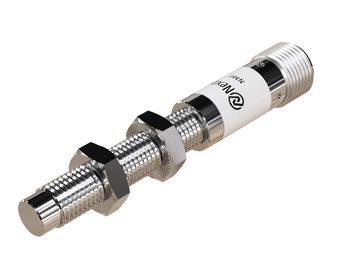
Inductive sensor M8 Metal face 70 mm connector M12 NPN NO Sn = 2 mm

Inductive sensor M8 Metal face 70 mm connector M12 NPN NC Sn = 2 mm

Inductive sensor M8 Metal face 70 mm connector M12 PNP NO Sn = 2 mm

Inductive sensor M8 Metal face 70 mm connector M12 PNP NC Sn = 2 mm

Inductive sensor M8 Metal face 53 mm connector M12 NPN NO Sn = 1 mm

Inductive sensor M8 Metal face 53 mm connector M12 NPN NC Sn = 1 mm

Inductive sensor M8 Metal face 53 mm connector M12 PNP NO Sn = 1 mm

Inductive sensor M8 Metal face 53 mm connector M12 PNP NC Sn = 1 mm

Inductive sensor M8 Metal face 53 mm connector M12 NPN NO Sn = 2 mm

Inductive sensor M8 Metal face 53 mm connector M12 NPN NC Sn = 2 mm

Inductive sensor M8 Metal face 53 mm connector M12 PNP NO Sn = 2 mm

Inductive sensor M8 Metal face 53 mm connector M12 PNP NC Sn = 2 mm

Inductive sensor M8 Metal face 70 mm connector M12 NPN NO Sn = 2 mm

Inductive sensor M8 Metal face 70 mm connector M12 NPN NC Sn = 2 mm

Inductive sensor M8 Metal face 70 mm connector M12 PNP NO Sn = 2 mm

Inductive sensor M8 Metal face 70 mm connector M12 PNP NC Sn = 2 mm

Inductive sensor M8 Metal face 70 mm connector M12 NPN NO Sn = 3,5 mm

Inductive sensor M8 Metal face 70 mm connector M12 NPN NC Sn = 3,5 mm

Inductive sensor M8 Metal face 70 mm connector M12 PNP NO Sn = 3,5 mm

Inductive sensor M8 Metal face 70 mm connector M12 PNP NC Sn = 3,5 mm

Inductive sensor M8 Metal face 53 mm connector M12 NPN NO Sn = 2 mm
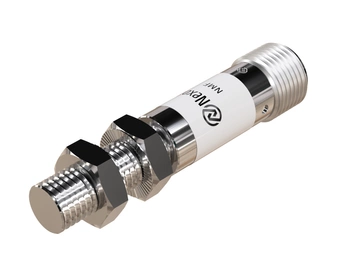
Inductive sensor M8 Metal face 53 mm connector M12 NPN NC Sn = 2 mm

Inductive sensor M8 Metal face 53 mm connector M12 PNP NO Sn = 2 mm

Inductive sensor M8 Metal face 53 mm connector M12 PNP NC Sn = 2 mm

Inductive sensor M8 Metal face 53 mm connector M12 NPN NO Sn = 3,5 mm

Inductive sensor M8 Metal face 53 mm connector M12 NPN NC Sn = 3,5 mm

Inductive sensor M8 Metal face 53 mm connector M12 PNP NO Sn = 3,5 mm

Inductive sensor M8 Metal face 53 mm connector M12 PNP NC Sn = 3,5 mm

Inductive sensor M12 Metal face 68 mm connector M12 NPN NO Sn = 2 mm

Inductive sensor M12 Metal face 68 mm connector M12 NPN NC Sn = 2 mm

Inductive sensor M12 Metal face 68 mm connector M12 PNP NO Sn = 2 mm

Inductive sensor M12 Metal face 68 mm connector M12 PNP NC Sn = 2 mm
Inductive sensor – what it detects and how it works
An inductive sensor, also called a proximity sensor, detects metal objects without contact. It creates an electromagnetic field at its sensing face. When metal enters the range, the field changes and the sensor switches its output. It does not detect non-metallic materials such as plastic, wood or glass. In machines it is used to check the presence and position of parts and to count them.
How to choose an inductive sensor
- thread size – M4 and M5 for tight spaces, M8 and M12 for most machines, M18 and M30 when a longer range is needed,
- sensing range Sn – from 0.6 mm in miniature sensors up to 50 mm in M30 with non-flush mounting,
- flush or non-flush mounting – a flush sensor can sit level with the metal surface but has a shorter range; a non-flush one needs free space around the sensing face,
- PNP or NPN output – depends on the controller inputs, the differences are explained in the guide PNP vs NPN – how inductive sensors differ,
- NO, NC or NO & NC function – normally open, normally closed or both contacts in one sensor; more in the guide inductive sensors NO, NC and NO & NC,
- connection – cable or M8 / M12 connector; sensors with a connector match Cables and Connectors.
Nexotec inductive sensor families
- Miniature Inductive Sensors – M4 and M5, sensing range Sn 0.6–1.5 mm,
- Inductive Sensors in Threaded Housings – M8–M30, sensing range Sn 1–50 mm,
- All-Metal Inductive Sensors – M8–M30, housing and sensing face made of stainless steel, Sn 1–13 mm,
- Inductive Sensors for Welding – M8–M30, resistant to welding spatter, Sn 1–15 mm,
- Rectangular Inductive Sensors,
- Inductive Sensors for Ferrous Metals,
- Inductive Sensors for Non-Ferrous Metals,
- Accessories – M8 and M12 cables and connectors.
Sensing range and the detected metal
The rated range applies to steel. For other metals, multiply it by the reduction factor: Fe37 steel – 1, cast iron – 0.95–1, stainless steel – 0.8–1, nickel – 0.6–0.75, brass – 0.4–0.7, aluminium – 0.35–0.6, copper – 0.25–0.5. Example: a sensor with a 4 mm range detects aluminium from 1.4 to 2.4 mm.
Frequently asked questions
What is the difference between an inductive and a proximity sensor?
An inductive sensor is a type of proximity sensor that detects metal only. Both names are used in the shop. More about proximity sensors in the article proximity sensors in automation systems.
Does an inductive sensor detect aluminium?
Yes, but from a shorter distance than steel. The reduction factor for aluminium is 0.35–0.6.
What is the difference between PNP and NPN?
It is the sensor's output type. PNP switches the positive voltage, NPN switches the ground (0 V). The choice depends on the controller inputs.
What warranty do Nexotec sensors have?
24 months.
