

Add products by adding codes
PNP vs NPN – how do inductive sensors differ?
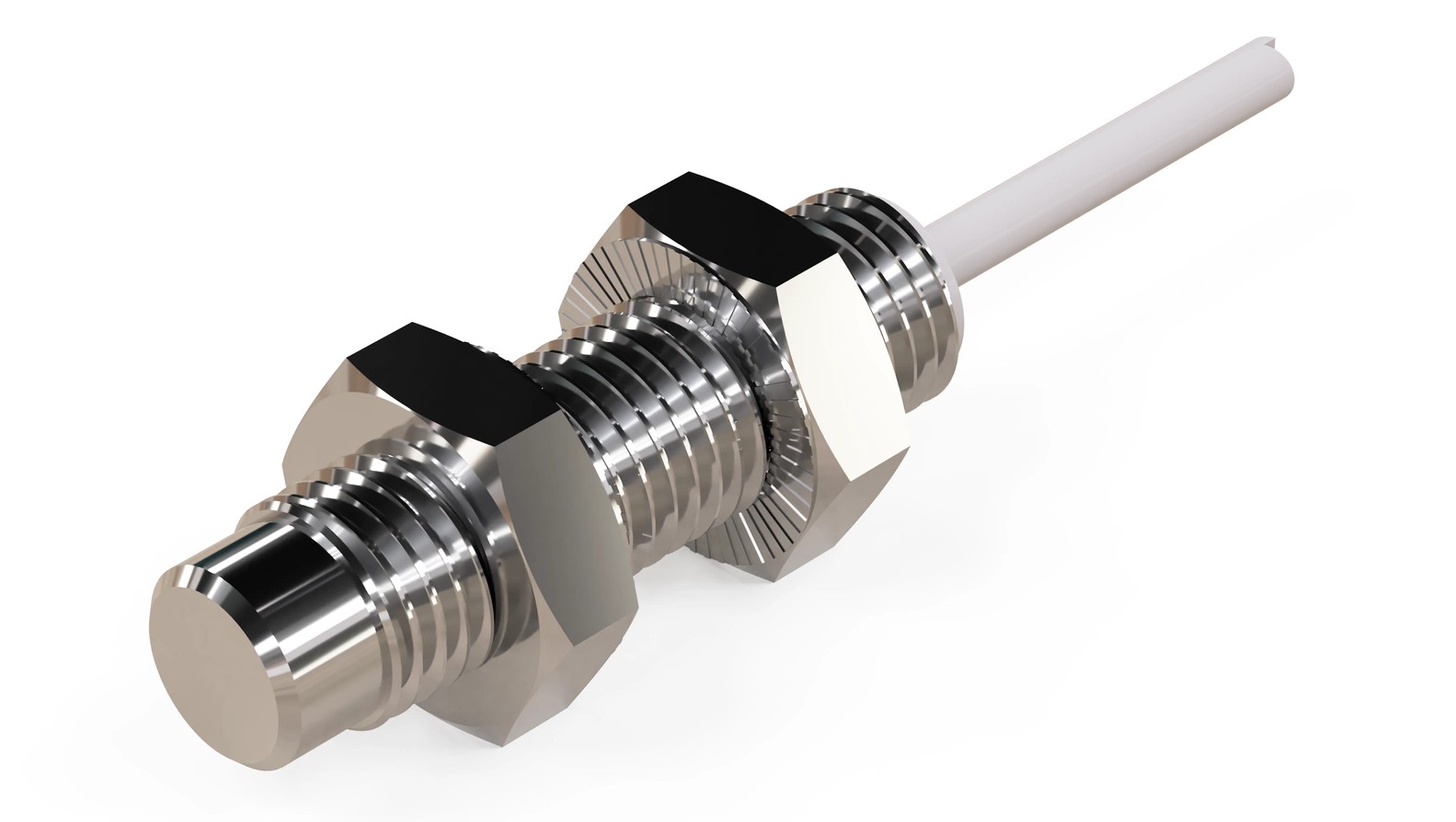
In industrial automation, choosing the right inductive sensor is the foundation of efficiently operating control systems. The most commonly used are PNP and NPN type sensors, which – despite their similar construction – differ fundamentally in how they operate and in their range of applications. Understanding these differences is essential for proper integration into automation systems, as well as for ensuring the safety and reliability of processes.
In short: a PNP sensor outputs a positive (+) signal and is the standard in most modern PLC controllers. An NPN sensor, upon detecting an object, closes the circuit to ground (minus) and is still found in older installations. The choice depends solely on the type of inputs on your controller – not on which sensor is "better".
What do the abbreviations PNP and NPN mean?
PNP and NPN are terms related to the internal construction of inductive sensors, based on bipolar transistors. In practice, they define how the sensor controls the flow of current and transmits the signal to the control system.
• PNP sensors, also called "sourcing" sensors, connect the load to the positive supply pole upon detecting an object. This means that in the active state, they transmit a positive signal – the so-called "plus" – to the controller input.
• NPN sensors, called "sinking" sensors, work the other way around – upon detecting an object, their output connects the load to ground (minus). As a result, in the active state, the control signal is "pulled down to minus".
Key differences
The key difference lies in how the sensor transmits the signal: a PNP sensor supplies a positive voltage to the controller, while an NPN sensor "closes the circuit" by connecting it to ground. This means that when choosing an inductive sensor, its type must be matched to the controller's inputs so that the entire system operates correctly and without interference.
| Feature | PNP | NPN |
| Signal in active state | Positive (+) | Ground / minus (0V) |
| Sensor output type | Sourcing | Sinking |
| Popularity in Europe | More common | Less commonly used |
| Typical application | Modern PLC systems | Older installations |
Applications of PNP and NPN sensors
The type of sensor should always be selected according to the specifics of the installation and the technical requirements of the system.
• PNP sensors are often chosen for modern automation systems due to easier integration with PLC controllers, which usually have inputs designed for PNP-type signals. This makes the assembly and configuration of such systems more intuitive and reliable.
• NPN sensors work well where the control system requires the signal to be connected to ground (minus). They are also used in older installations or where the control inputs are designed for NPN-type signals.
When to choose PNP, and when NPN?
The choice between a PNP sensor and an NPN sensor depends on how the control system is configured and what standards apply in a given facility. It is very important not to mix both types on the same signal line, as this can damage the equipment. Automation designers typically choose PNP sensors for inputs that respond to the positive supply (+), and NPN sensors for inputs that respond to ground (0 V).
How to connect a PNP and NPN sensor
A three-wire sensor has two supply wires and one output wire. Wire colours and pin numbers are the same in M8 and M12 connectors:
| Wire | Connector pin | Function |
| brown (BN) | 1 | supply + |
| blue (BU) | 3 | supply 0 V |
| black (BK) | 4 | output |
PNP sensor – the load (controller input, relay) is connected between the black wire and 0 V. When an object is detected, the sensor switches the positive supply to it.
NPN sensor – the load is connected between the black wire and the positive supply. When an object is detected, the sensor switches the output to ground.
In sensors with two outputs (NO and NC), the NO output is on the black wire (pin 4) and the NC output is on the white wire (WH, pin 2).
Frequently asked questions
What does PNP mean on a sensor?
PNP is a type of transistor output: when an object is detected, the sensor switches the positive supply (+) to the output. Such an output is also called sourcing.
What does NPN mean on a sensor?
NPN is an output that switches the signal wire to ground (0 V) when an object is detected. Such an output is also called sinking.
Can a PNP sensor be replaced with an NPN sensor in the same installation?
Not without changing the wiring and checking the controller's inputs – connecting both types on the same signal line can damage the equipment.
Which sensor type is more reliable – PNP or NPN?
Both types are equally reliable. The choice is determined solely by compatibility with the PLC controller's inputs, not by the quality of the sensor itself.
How can I tell whether my controller requires PNP or NPN?
Check the controller's technical documentation – information about the input type (sourcing or sinking) is usually found in the I/O specification.
Summary
Understanding the differences between PNP and NPN sensors is essential knowledge for every automation engineer. Choosing the right inductive sensor not only makes integration with the control system easier, but above all ensures the safety, reliability, and high efficiency of the entire production process.
In the world of automation, it's the details that determine success – and selecting the right sensor type is one of the most important steps affecting the smooth, trouble-free operation of the entire installation.