


Add products by adding codes
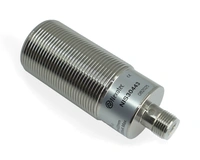


Inductive sensor M8 for welding process 60 mm connector M8 PNP NO Sn = 1 mm
- ● Brass housing with PTFE coating
- ● Extended version for open mounting areas
- ● Brass housing with PTFE coating
- ● Durable in welding environments
- ● Plug-in type, water- and splash-resistant
Subscription products in your shopping cart
Set one delivery frequency for all subscription products in your cart every:
Subscription products in your shopping cart
The NWI08103 inductive sensor for welding applications is designed for reliable operation in demanding industrial conditions, ensuring stable detection of metal parts even close to welding processes.
Because of its small M8 size, the sensor does not interfere with welding equipment mounted in its immediate vicinity, Ø8 x 60 mm is a format that provides good mounting accessibility while maintaining a rugged construction resistant to welding conditions.
Technical specification:
- Diameter: M8, a compact diameter that makes mounting on a welding robot arm easier
- Length: 60 mm, an extended housing that provides extra mounting rigidity under harsh welding conditions
- Detection range: 1 mm, stable metal-detection characteristics even close to a resistance-welding machine's electromagnetic field
- Housing: Threaded, the housing thread allows fine adjustment of the detection distance during installation on the line
- Housing material: Brass with PTFE coating, the PTFE coating increases the housing's resistance to the contamination typical of a welding environment
- Sensor face material: PTFE, the PTFE coating on the sensing face makes cleaning the station easier without risking damage to the sensor
- Mounting: Flush mounting, the flush version allows the sensor to be recessed into the metal fixtures of the welding station
- Switching function: normally open (NO), standard normally-open logic, compatible with the typical PLC controllers used on welding lines
- Output type: PNP, a PNP output that is standard for most new welding automation installations
- Connection: with a M8 plug connector, a plug connector allows quick sensor replacement without dismantling the entire welding installation
- Supply voltage: DC 10-30V, a standard voltage range compatible with the power supply of most welding-line control cabinets
- Electromagnetic interference (EMC) resistance: yes, a stable output signal even in the immediate vicinity of the strong electromagnetic fields present during welding
- Catalog number: W1CF-M0801P-OPU3
Applications
- It is used in welding automation systems and resistance welding automation systems as a feedback element for the PLC controller.
- It is a component of welding process control systems and resistance welding process control systems, confirming the presence and position of parts.
- It is used in automated welding systems and automated resistance welding systems operating continuously.
- It performs well in robotic welding systems and robotic welding lines, where robots operate without constant operator supervision.
- It supports the operation of smart welding lines and smart welding stations integrated with higher-level control systems.
Benefits/Features
- Proven to be resistant to electromagnetic fields, it operates reliably even in the immediate vicinity of the coils and current-carrying cables of a welding machine.
- It is suited to operation in a strong electromagnetic field, typical of resistance welding and arc welding.
- Its proven EMC resistance is valued by integrators building EMC-resistant industrial sensors for welding and resistance-welding applications.
- Thanks to its high resistance, it performs well in environments with high levels of electromagnetic interference, such as those generated by welding machines.
- It can be used as a welding machine sensor resistant to interference and a resistance welding machine sensor resistant to electromagnetic interference.
When to choose this model
- When the sensor must operate in an industrial resistance-welding machine exposed to harsh operating conditions.
- When the resistance-welding process requires non-contact detection of metal parts.
- When component detection is needed on an automated welding or resistance-welding line.
- When the process requires the use of an industrial proximity sensor resistant to harsh conditions.
The diameter of an inductive sensor is a dimension that defines the width of the sensor element measured in millimeters. This is an important technical parameter as it affects the mounting method and the space required for installation.
Rated detection range is a key parameter of an inductive sensor.Indicates the distance at which the sensor changes its output state when a metal object approaches its front end axially.This is the sensor's most important functional feature—it determines how close the object being detected must be in order to be registered.
This product is covered by a 24-month warranty from the date of purchase. Claims can be submitted via the complaint form in our shop. Your statutory rights are not affected by this warranty.