


Add products by adding codes


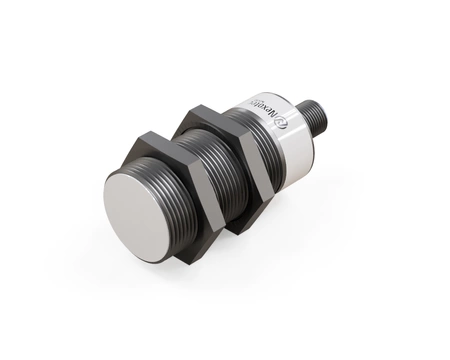


Inductive sensor M30 for welding process 79 mm connector M12 PNP NO Sn = 10 mm
- ● M30 with increased resistance to spatter
- ● Long design for wide industrial assemblies
- ● Comfortable operating zone in standard systems
- ● Coating protects against spatter
- ● Plug-in type, precise in demanding applications
Subscription products in your shopping cart
Set one delivery frequency for all subscription products in your cart every:
Subscription products in your shopping cart
The NWI30103 inductive sensor for welding automation ensures stable, long-lasting operation in welding robots, production machinery, and automated industrial stations.
The large M30 diameter enables detection of parts from a greater distance, which matters in welding cells with large components, Ø30 x 79 mm are proportions that ensure stable detection even under the vibration generated by a resistance-welding machine.
Technical specification:
- Diameter: M30, the largest size in the range, for applications requiring a long detection distance
- Length: 79 mm, an extended housing that provides extra mounting rigidity under harsh welding conditions
- Detection range: 10 mm, a proven detection range under conditions typical of robotic welding
- Housing: Threaded, the housing thread allows fine adjustment of the detection distance during installation on the line
- Housing material: Brass with PTFE coating, a PTFE layer on the brass housing reduces weld spatter sticking to the sensor's surface
- Sensor face material: PTFE, the PTFE coating on the sensing face makes cleaning the station easier without risking damage to the sensor
- Mounting: Flush mounting, the flush version allows the sensor to be recessed into the metal fixtures of the welding station
- Switching function: normally open (NO), the NO function simplifies integration with most existing resistance-welding machine control systems
- Output type: PNP, a PNP output that is standard for most new welding automation installations
- Connection: with a M12 plug connector, a plug connector allows quick sensor replacement without dismantling the entire welding installation
- Supply voltage: DC 10-30V, a typical industrial automation supply voltage, with no need for additional converters
- Electromagnetic interference (EMC) resistance: yes, EMC resistance allows mounting close to a resistance-welding machine's coils and current-carrying cables without signal loss
- Catalog number: W1CF-M3010P-OEU4
Applications
- It is an inductive sensor for resistance welding, used where the process generates a strong electromagnetic field and high temperatures.
- Used in resistance welding machines and resistance-welding equipment, it supports precise positioning of parts before welding.
- It works well as a spot welding sensor and supports resistance welding automation on production lines.
- It is used in resistance-welding robots as an inductive sensor for resistance-welding robots, operating in the immediate vicinity of the weld point.
- Used on resistance-welding lines and automated resistance welding lines, where cycle repeatability matters most.
Benefits/Features
- A sensing face that is resistant to contamination and resistant to dust maintains stable detection sensitivity even in heavily dust-laden production halls.
- It performs well in heavy-duty operating conditions, typical of welding and resistance-welding shops, where sensors are exposed to vibration and contamination.
- As an industrial sensor for harsh conditions, it is a popular choice for demanding industrial applications and demanding welding applications.
- A construction resistant to the welding environment and to spatter generated during welding extends the sensor's real service life on the line.
- An IP67-rated housing protects the sensor's interior against dust and water jets, which matters when cleaning a welding station.
When to choose this model
- When the sensor will be used on an automated welding line and must provide stable detection of metal parts.
- When the application requires resistance to the spatter generated during welding.
- When the sensor must work together with a welding station's automation system.
- When the model is to support resistance-welding process automation through part-position monitoring.
The diameter of an inductive sensor is a dimension that defines the width of the sensor element measured in millimeters. This is an important technical parameter as it affects the mounting method and the space required for installation.
Rated detection range is a key parameter of an inductive sensor.Indicates the distance at which the sensor changes its output state when a metal object approaches its front end axially.This is the sensor's most important functional feature—it determines how close the object being detected must be in order to be registered.
This product is covered by a 24-month warranty from the date of purchase. Claims can be submitted via the complaint form in our shop. Your statutory rights are not affected by this warranty.