


Add products by adding codes


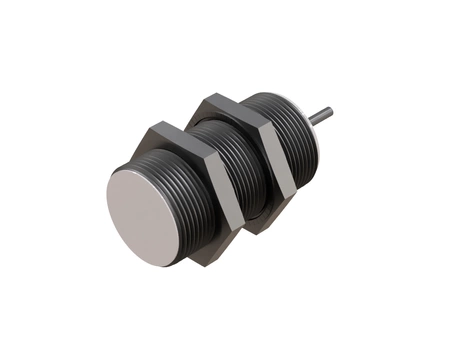


Inductive sensor M30 for welding process 55 mm cable 2m NPN NC Sn = 10 mm
- ● M30 for automation in welding processes
- ● Enlarged version for bigger systems
- ● Typical distance ensuring reliability
- ● Resistant to hot metal spatter
- ● With cable, ideal for demanding applications
Subscription products in your shopping cart
Set one delivery frequency for all subscription products in your cart every:
Subscription products in your shopping cart
The modern NWI30002 Heavy Duty inductive sensor for welding guarantees long service life and reliable performance in applications exposed to intensive loads and harsh environmental conditions.
The M30 size delivers the maximum detection range in this product line, useful for large resistance-welded structures, Ø30 x 55 mm are dimensions that allow quick sensor replacement without dismantling the entire welding setup.
Technical specification:
- Diameter: M30, the maximum detection range in this line, for large parts and welding cells
- Length: 55 mm, an extended housing that provides extra mounting rigidity under harsh welding conditions
- Detection range: 10 mm, a proven detection range under conditions typical of robotic welding
- Housing: Threaded, a threaded housing allows precise adjustment of the sensor's position relative to the weld point
- Housing material: Brass with PTFE coating, a PTFE layer on the brass housing reduces weld spatter sticking to the sensor's surface
- Sensor face material: PTFE, a PTFE sensing face prevents metal spatter from welding and resistance welding from sticking
- Mounting: Flush mounting, the flush version allows the sensor to be recessed into the metal fixtures of the welding station
- Switching function: normally closed (NC), NC logic detects a missing part as an active signal, which makes it easier to control the resistance-welding process
- Output type: NPN, an NPN output compatible with the controllers commonly used in welding automation
- Connection: with a 2 m cable, a cable resistant to the vibration and frequent movement typical of welding robots
- Supply voltage: DC 10-30V, a standard voltage range compatible with the power supply of most welding-line control cabinets
- Electromagnetic interference (EMC) resistance: yes, proven resistance to the electromagnetic interference generated by resistance-welding machines and welding robots
- Catalog number: W1CF-M3010N-C3U2
Applications
- It performs well in robotic welding systems and robotic welding lines, where robots operate without constant operator supervision.
- It supports the operation of smart welding lines and smart welding stations integrated with higher-level control systems.
- It is used within the Industry 4.0 concept in welding and resistance welding, where sensor data feeds into production monitoring systems.
- It supports the robotization of welding processes and the robotization of resistance-welding processes, increasing line repeatability and throughput.
- It is used in production automation and production robotization at plants where welding and resistance welding are a key process step.
Benefits/Features
- Thanks to its high resistance, it performs well in environments with high levels of electromagnetic interference, such as those generated by welding machines.
- It can be used as a welding machine sensor resistant to interference and a resistance welding machine sensor resistant to electromagnetic interference.
- It maintains signal stability as a welding sensor resistant to electromagnetic interference, reducing the number of false detections.
- Stable operation of the inductive sensor in the welding environment and resistance to electromagnetic interference during welding are key features of this model.
- A robust, fully enclosed construction and high-quality housing materials ensure a long service life under continuous-duty cycles.
When to choose this model
- When part-position monitoring is required during automated welding.
- If reliable part detection is required in a resistance-welding machine.
- If the process requires fast detection of metal parts in a robotic application.
- When the application requires a sensor for a robotic resistance-welding line.
The diameter of an inductive sensor is a dimension that defines the width of the sensor element measured in millimeters. This is an important technical parameter as it affects the mounting method and the space required for installation.
Rated detection range is a key parameter of an inductive sensor.Indicates the distance at which the sensor changes its output state when a metal object approaches its front end axially.This is the sensor's most important functional feature—it determines how close the object being detected must be in order to be registered.
This product is covered by a 24-month warranty from the date of purchase. Claims can be submitted via the complaint form in our shop. Your statutory rights are not affected by this warranty.