


Add products by adding codes


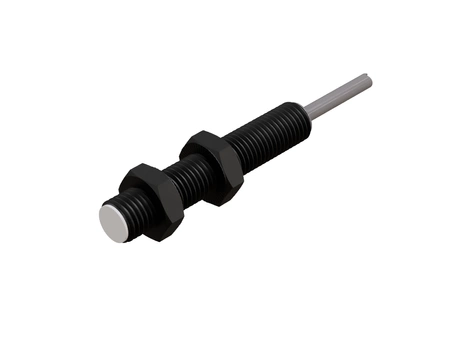


Inductive sensor M8 for welding process 45 mm cable 2m NPN NO Sn = 1 mm
- ● M8 for operation in tough welding conditions
- ● For installation in confined areas
- ● Minimum distance for accurate detection
- ● Resistant to hot metal spatter
- ● With cable, resistant to dirt and dust
Subscription products in your shopping cart
Set one delivery frequency for all subscription products in your cart every:
Subscription products in your shopping cart
NWI08001
The NWI08001 welding inductive sensor is a solution built for industrial automation, where high durability, repeatable performance, and long-term trouble-free operation are required.
The small M8 dimensions make it easy to integrate with spot-welding gun holders, where every millimeter of space counts, Ø8 x 45 mm is a format that provides good mounting accessibility while maintaining a rugged construction resistant to welding conditions.
Technical specification:
- Diameter: M8, the smallest size in this line, good for tight spaces in spot welding
- Length: 45 mm, a short length that makes mounting easier in densely packed welding stations
- Detection range: 1 mm, repeatable detection of metal parts regardless of the interference generated during welding
- Housing: Threaded, the housing thread allows fine adjustment of the detection distance during installation on the line
- Housing material: Brass with PTFE coating, the PTFE coating increases the housing's resistance to the contamination typical of a welding environment
- Sensor face material: PTFE, the PTFE material keeps detection parameters stable even after repeated contact with spatter
- Mounting: Flush mounting, flush mounting protects the sensor from side impacts and spatter
- Switching function: normally open (NO), standard normally-open logic, compatible with the typical PLC controllers used on welding lines
- Output type: NPN, an NPN output compatible with the controllers commonly used in welding automation
- Connection: with a 2 m cable, a cable of suitable length makes it easy to route the wiring away from the hottest zone of the weld
- Supply voltage: DC 10-30V, a typical industrial automation supply voltage, with no need for additional converters
- Electromagnetic interference (EMC) resistance: yes, a stable output signal even in the immediate vicinity of the strong electromagnetic fields present during welding
- Catalog number: W1CF-M0801N-O3U2
Applications
- The sensor is a common choice among industrial welding sensors and inductive sensors for welding, mounted directly at the workstation.
- It works well as a welding application sensor and sensor for welding applications, where stable detection of metal parts is essential.
- It belongs to the class of welding cell sensors and inductive sensors for welding cells, used in the enclosed working zones of robots.
- It is an excellent fit for welding stations and automated welding stations, where repeatable, downtime-free operation is required.
- It is used in welding machines and as an inductive sensor for welding machines, monitoring the position and presence of parts.
Benefits/Features
- The construction's resistance to weld spatter keeps the sensor working reliably even in direct contact with hot metal particles.
- The sensor is spatter-resistant against particles generated during welding and resistance welding, reducing the risk of damage to the sensing face.
- Designed to operate in a welding environment, it maintains stable parameters despite harsh ambient conditions.
- It performs well in harsh welding conditions, including elevated temperatures and heavy dust in the work zone.
- As an inductive sensor for harsh industrial conditions, it maintains repeatable detection even under intensive use.
When to choose this model
- When you need a sensor for a robotic welding process where reliable part detection is essential.
- When the sensor must monitor the presence and position of a part during resistance welding.
- When component detection is needed on an automated welding or resistance-welding line.
- When the process requires the use of an industrial proximity sensor resistant to harsh conditions.
The diameter of an inductive sensor is a dimension that defines the width of the sensor element measured in millimeters. This is an important technical parameter as it affects the mounting method and the space required for installation.
Rated detection range is a key parameter of an inductive sensor.Indicates the distance at which the sensor changes its output state when a metal object approaches its front end axially.This is the sensor's most important functional feature—it determines how close the object being detected must be in order to be registered.
The manufacturer guarantees repair or replacement of the equipment for up to 24 months from the date of purchase. Contact the store via the complaint form to order a courier who will collect the equipment from your home.