

Add products by adding codes
Inductive sensors with an anti-adhesive coating – what makes them different?
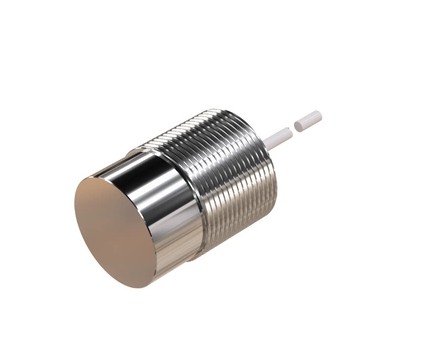
In the rapidly developing world of industrial automation, measurement precision and reliability play a crucial role. Inductive sensors are among the most popular technologies used for detecting metal objects, but their effectiveness can be affected by demanding environmental conditions. Innovative inductive sensors with an anti-adhesive coating have been developed in response to these challenges, significantly improving equipment performance and durability in demanding applications.
What are inductive sensors?
The primary purpose of inductive sensors is the contactless detection of the presence or movement of metal components using electromagnetic induction. They are commonly found on production lines, in machine automation and in quality control systems. Their operation is based on generating an electromagnetic field that is disturbed by the presence of conductive metal. This changes the signal parameters and allows the object to be detected.
The accumulation of contaminants – a challenge for industrial sensors
In industrial environments, inductive sensors are often exposed to oils, dust and other contaminants that may accumulate on their surfaces. This phenomenon, known as adhesion, can reduce sensitivity and increase the risk of failure. Dirty or coated sensor surfaces may distort the signal, require more frequent maintenance shutdowns and increase operating costs.
Anti-adhesive coatings offer an effective solution by limiting the accumulation of contaminants on the sensor surface. Special materials with low surface energy, such as PTFE or silicone coatings, make the surface less receptive to oils, dust and other particles.
Advantages of inductive sensors with an anti-adhesive coating
- Greater reliability – reduced contaminant accumulation improves operational stability and measurement precision.
- Lower maintenance costs – less frequent cleaning and servicing extend uninterrupted operating time.
- Resistance to demanding conditions – the sensors perform well in oily, dusty and humid environments.
- Increased durability – the coating protects sensor components against corrosion and mechanical abrasion.
Where should sensors with an anti-adhesive coating be used?
Inductive sensors with an anti-adhesive coating are suitable wherever standard sensors are exposed to deposits of oil, grease, dust or other contaminants. They are an ideal solution for the automotive industry, metallurgy, machinery manufacturing, food processing and the chemical industry, where demanding environmental conditions are common. The anti-adhesive coating prevents contaminants from sticking to the sensor, improving detection reliability, reducing the need for frequent servicing and extending equipment life. This ensures smooth and efficient operation even in the most demanding applications.
Summary
Inductive sensors with an anti-adhesive coating are an example of an intelligent technical solution that significantly improves the efficiency and durability of industrial automation systems. By investing in these devices, companies benefit from greater production stability, lower maintenance costs and more accurate metal object detection. It is an innovation that literally “repels” problems, allowing businesses to focus on production quality and efficiency.