

Add products by adding codes
Inductive Sensors in Industrial Automation – How to Select the Right Model for Your Production Requirements?
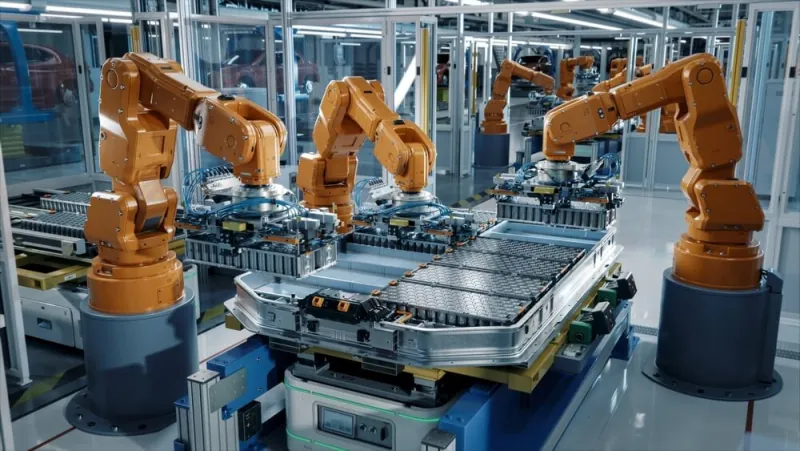
Inductive sensors play a key role in monitoring and controlling production processes. Selecting the right sensor based on operating conditions, the type of components and production-line parameters determines the efficiency, repeatability and stability of the entire system. Not every sensor is suitable for every application, which is why analysing the process characteristics and technological requirements is essential when choosing the right model.
Understanding the Fundamentals of Inductive Sensor Operation
Inductive sensors detect the presence of metal objects without physical contact by using electromagnetic induction. This allows them to operate continuously, regardless of the speed of moving components, and to record changes in position with high precision. Understanding this mechanism is crucial when selecting the appropriate sensor type, as different models vary in sensitivity, sensing range and resistance to environmental conditions.
Sensor Selection Criteria
The selection of the right inductive sensor should be based on several key criteria:
· material type and dimensions of the detected component – not all sensors can detect components with minimal thickness or those made from an unusual metal alloy,
· sensing range – the length of the zone within which the sensor can reliably detect a metal object should be matched to the machine characteristics and transport speed,
· operating environment – dust, moisture, vibration and high temperatures require models with enhanced resistance and an appropriate ingress protection rating,
· mounting method – the sensor design should be selected according to the space available in the machine and the mounting method (flush or non-flush mounting, cylindrical or rectangular housing),
· output signal – choosing between a PNP, NPN or analogue signal affects compatibility with the PLC control system or other automation components.
Adapting the Sensor to Production Requirements
Different production lines have different requirements. In packaging processes, a rapid response with minimal deviations in component positioning is essential, whereas resistance to extreme conditions and mechanical durability are more important in heavy industry.
Short-range sensors are suitable for precise sorting systems, while models with a larger sensing zone are ideal for transporting components on conveyors. For production lines operating in demanding environmental conditions (dust, water or oils), choose sensors with housings resistant to external factors and compliant with the relevant IP standards.
Integration with Automation Systems
When selecting an inductive sensor, it is also important to consider its compatibility with the existing automation system. The sensor status signal should be received seamlessly by the PLC. In more advanced systems, analogue sensors can be used to monitor component positions continuously.
A properly selected sensor does more than detect the presence of an object—it becomes an integral part of process optimisation. It makes it possible to analyse production cycles, quickly identify delays and irregularities, and respond in real time, thereby increasing the efficiency of the entire production line.
NEXOTEC – Sensors Adapted to Diverse Requirements
NEXOTEC inductive sensors are modern solutions that combine measurement precision with exceptional durability and reliability, making them a cornerstone of effective industrial automation. Contactless detection and monitoring of metal objects enable precise control of production processes, even in the most demanding environments. Their robust construction and high resistance to external factors make NEXOTEC sensors suitable for a wide range of industries—from automotive and mechanical engineering to food production and electronics—ensuring repeatable operations and production-line stability.
For demanding industrial environments, NEXOTEC offers all-metal sensors and models designed specifically for welding applications. They are resistant to extreme temperatures, impacts, metal spatter and aggressive chemicals. Versatile compact models, in turn, provide flexibility in standard automation applications and quality-control systems.
The combination of advanced technology and robust construction makes it possible to optimise processes, increase machine efficiency and minimise downtime, making NEXOTEC sensors an indispensable element of modern industrial automation.